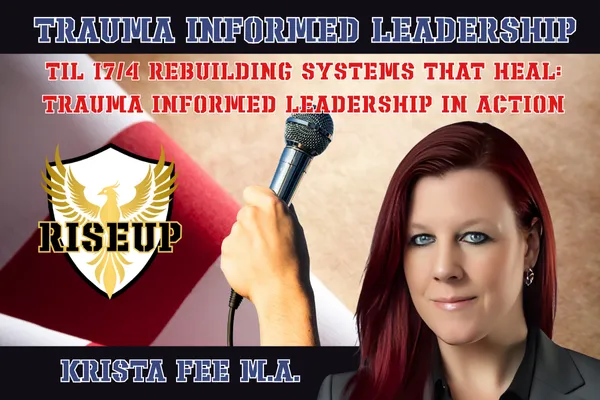
Rebuilding Systems That Heal: Trauma Informed Leadership in Action
Rebuilding Systems That Heal: Trauma-Informed Leadership in Action
Why organizations need more than reconstruction—they need rebirth
By Krista Fee – Founder of RISEUP Phoenix Trauma and Crisis Institute
For decades, I have worked with survivors, first responders, and leaders navigating broken systems. Again and again, the same truth emerges: when structures collapse, whether governments, organizations, or families, people often rush to rebuild exactly what was there before. However, if the old system was flawed, carrying dysfunction, fear, or exploitation, rebuilding it merely reinstates the same cycle.
This is where trauma-informed leadership matters most. My mission is to guide leaders beyond reconstruction into transformation, helping them design systems that not only survive crises but also rise stronger from them.
When Systems Break
History shows us that collapse is inevitable. Empires fall. Governments fracture. Companies implode. Even families can crumble under the weight of betrayal or abuse. What comes next determines whether communities perpetuate trauma or build resilience.
Think of post-scandal corporations that rushed back to “business as usual,” ignoring the deeper issues of corruption or culture. Or schools after violence that increase surveillance but fail to restore trust. Without intentional transformation, broken systems remain fragile replicas of their former selves.
Trauma survivors know this pattern personally: without healing, reenactment repeats. Organizations are no different. Systems reenact harm unless they are intentionally designed for renewal.
SAMHSA’s Six Principles: A Blueprint for Renewal
The U.S. Substance Abuse and Mental Health Services Administration (SAMHSA) identifies six guiding principles for trauma-informed practice: safety, trustworthiness, peer support, collaboration, empowerment, and cultural responsiveness.
Why do these principles matter for organizational leadership? Because the toxic behaviors that poison organizations mirror the addictive behaviors that poison individual lives. Just as addiction thrives on secrecy, denial, and control, toxic systems thrive on blame, silencing, and hierarchy.
When we treat systemic dysfunction like a disease—naming the behaviors, creating accountability, and embedding healing practices—we offer the same opportunity for recovery that we extend to individuals. Systems, like people, can heal.
Story: A Fire Department’s Turning Point
I once worked with a fire department grappling with burnout, internal mistrust, and high turnover. The instinct was to double down on discipline, exert more control, impose stricter rules, and offer less flexibility. But those strategies only deepened resentment.
When the department shifted to trauma-informed principles, everything changed. Leadership created safe channels for peer support, offered transparency about resource struggles, and trained supervisors in collaborative communication. Over time, trust was rebuilt. Firefighters reported lower stress, higher morale, and stronger community relationships.
The system didn’t just return to “normal.” It transformed into something healthier.
The RISEUP Rules of Engagement
At RISEUP Phoenix, we’ve created a communication protocol designed to keep organizations out of reenactment cycles: the RISEUP Rules of Engagement.
No Blame – Accountability replaces scapegoating.
No Shame or Guilt – Emotions are honored but not weaponized.
No Mindreading – Motives are clarified, not assumed.
No Assumptions – Decisions rest on evidence, not projection.
No Name-Calling – Dignity is preserved, even in conflict.
These rules echo relationship science. John Gottman’s research on “The Four Horsemen” (criticism, contempt, defensiveness, and stonewalling) has shown how marriages fail when corrosive communication patterns dominate. The same applies to organizations: contempt poisons trust, blame silences honesty, and assumptions erode resilience.
The antidote is communication anchored in dignity and present-focused problem-solving.
Power in the Present
Trauma pulls both individuals and systems backward, chaining them to the past. Renewal happens when leaders reorient to the present.
That doesn’t mean ignoring history. Ashes must be acknowledged. But it does mean refusing to live inside them. Present-focused leadership asks:
What is actually happening right now?
How can we honor feelings without letting them dictate dysfunction?
What outcomes do we want instead of endless rehearsals of the past?
This approach mirrors solution-focused psychology: we don’t deny wounds, we focus on possibilities.
The Trap of “This Is How We’ve Always Done It”
Rigid systems often defend dysfunction with one phrase: “This is how we’ve always done it.”
But trauma-informed leadership resists that trap. Systems must be fluid enough to adapt to the times, flexible enough to meet needs in real-time, and disciplined enough to stay tethered to their values.
Survivors of crisis, whether individuals or organizations, cannot heal by rehearsing old patterns. Renewal demands innovation rooted in integrity.
Learning from Crisis Response
In Battle2be and RISEUP’s crisis deployments, we’ve seen what happens when systems embrace transformation. After floods displaced entire communities, resilience came not from restoring old bureaucracies but from neighbors building new networks of care. After trafficking rescues, real healing requires aftercare programs and resources, not just arrests.
These moments remind us: broken systems can rise again, but only when leaders choose transformation over repetition.
Practical Takeaways for Leaders
Audit Your System – Identify where blame, shame, and secrecy dominate.
Apply SAMHSA’s Six Principles – Treat organizational trauma like a disease that can heal.
Adopt RISEUP Rules of Engagement – Anchor communication in dignity and accountability.
Stay Present – Ground decisions in facts and desired outcomes, not cycles of grievance.
Challenge “We’ve Always Done It This Way” – Build systems fluid enough to adapt and principled enough to endure.
Final Reflection
The phoenix does not rise by replicating the ashes—it rises transformed. Systems, too, can be reborn when leaders embed safety, dignity, and adaptability into their foundations.
If you are responsible for an organization, ask yourself: Are we rebuilding replicas of the past, or are we rising to renewal?
Ready to Take Action?
👉 Book a call with me to explore how trauma-informed leadership can transform your organization: Schedule here
👉 Join the Trauma-Informed Leadership Course and Community — earn IACET CEUs, gain practical tools, and learn how to implement trauma-informed practices in every facet of leadership (link coming soon).


